JAPANESE

 The Alexander Technique Centre (ATC) Kyoto
HOME of the Alexander Technique Centre Kyoto/Japan ATC Kyoto Information about Alexander Technique ATC Kyoto Alexander Lessons, Workshops & Alexander Teacher Training Course Alexander Teachers in ATC Kyoto Alexander Technique Literature in ATC Kyoto Alexander Technique Links of ATC Kyoto Contact the Alexander Technique Centre Kyoto
ATC-Lessons
In ATC Kyoto we are dedicated to preserving and practising the essential principles of the F.M. Alexander Technique. Individual lessons are the best way to learn the Alexander Technique. The one-to-one situation enables the concentrated participation and the guidance from the teacher which Alexander indicated was so necessary. A series of lessons over a number of weeks is recommended. Once a week for about twenty five weeks is usually enough to obtain a basis of understanding which can be applied outside the lessons.
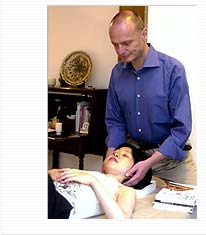
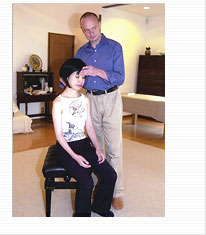
The heart of ATC Kyoto are private lessons meaning because we are all unique in our habits you always get the full, undivided attention of your teacher. We offer the opportunity of teaching and learning the Alexander Work and its technology in open and friendly atmosphere through the classical set of all known traditional and authentic Alexander teaching procedures. Among others two main components are Tablework (standard part of a lesson - to work with the limbs and their integration into the back in the semi-supine active resting, senceing the support underneath you the back lengthening and widening onto the table) and Chairwork in front of a mirror (monkey, lunge, working with the head-neck-back relationship seeing with clarity how to create balanced conditions which can be released into the activity). The effectiveness, efficiency, energy, joy, power and value of this time-tested teaching technologies has been attested to by the experience and application of countless thousands of people. Both are a working in activity and the pupil isn't just lying on a table or is seated on a chair the teacher working on her or him. For this re-educational and transformational process personal full attention, which also implies acceptance and is the key to transformation, is needed and therefore we teach / learn in one-to-one lessons, how to re-discover balance and ease within ourselves. Through direct experience and observation, we learn how our coordination works, how we create tension and how we can prevent or release it. This awareness changes longstanding habits. An ATC lesson with an Alexander Teacher is about learning a new way of approaching your everyday activities. It is not a therapeutic session where you remain passive. You are very much asked to participate and engage in the lesson, read around the subject, and take personal responsibility for your own change and growth.
To see more photos of Alexander Technique activities in the ATC Kyoto click here.
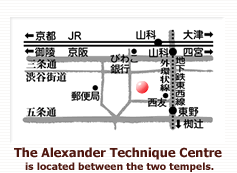
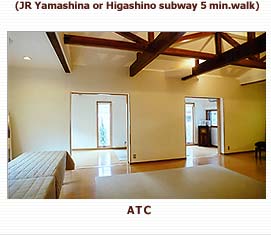
The ATC Alexander Technique Studio Kyoto operates seven days a week, 9:00 - 21:00. You can reach the ATC from Kyoto YAMASHINA station (JR & Subway 10 min. walk) or Kyoto HIGASHINO subway station (5 min. walk). If you reached a binding decision and wish to take qualified Alexander lessons in Japan please contact our space for availability of times to book your private lesson.


Do you belong to a group of musicians and performing artists who remember that they are sensitive and delicate instruments too? If you would like to experience more ease, confidence, a fuller range of expression as an artist and performer, and have more presence with your self, your instrument and music, and your audience you may visit our introductory workshops. For over 100 years the Alexander Work has been helping individuals enhance their kinesthetic integrity by letting go of unconscious mind and body habits that interfere with their natural way of being and performing in life. In our workshops they experience their undivided self and the innate lightness, poise and grace that comes when thinking and movement are one integrated action; thus giving up the stress and disconnectedness that comes when mind and body are split, and thinking and movement are seperate. Participants of our workshops for musicians experience human communication through "the touch of hand", showing pupil and teacher as partners who can listen to and grow from each other. All participants can cultivate their personal sensitivity through individual "hands on" experience with the Alexander Technique.

ATC - Introductory Courses
The Alexander Centre Kyoto has further studios in Minoh Osaka & Chiba, Tokyo. All campuses are connected with the International Music Academy Maestro-JP (Director: Junko Kasahara- pianist- www.musicmaestro.jp / info and media attention & recognition you can find in the original website). The institutions offer individual lessons, introductory workshops and seminars for musicians ("The Alexander Technique and Enhancing the Quality of Your Performances") in Hiroshima (Elisabeth University of Music), Chiba, Kobe, Nagoya, Nishinomiya (Nishinomia Music Society), Osaka (Osaka University of Arts, YAMAHA Music Osaka, Musicians' Union of Japan, Osaka Musikverein), Kyoto (Kyoto Women's University / Kyoto City University of Arts) Tokyo (Toho Gakuen School of Music - piano group, Mikimoto Methode Finger training school) and other japanese cities.
For more details about the Alexander Work for instrumentalists and how to bring an Alexander workshop to your area contact the ATC.

Info about the International Music Academy Maestro
International Music Academy Maestro was founded in 2002 by the concert pianist Junko Kasahara to create a cultural forum in Kyoto. Since then Maestro offers fundamental education for pianists combined with qualified lessons in the Alexander Technique and regular concerts with international artists. Musicians play on a high level various programs on Sunday afternoon. Please check IMA Maestro-Salon Concert for more info on these monthly special events. To hear & see Lucas Lorenzi playing japanese melodies click here

The ATC Kyoto Training Course for Teachers of the Alexander Technique
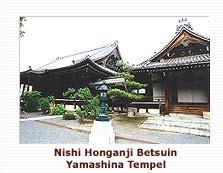
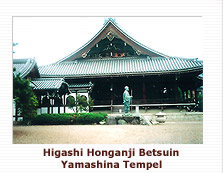
ATC Kyoto is situated in quiet historical area and offers the finest standard of teacher training program in a beautiful, peaceful, stimulating and supportive learning environment. To see location and building of the ATC Kyoto on a Google map click here. The training course at ATC offers a thorough Alexander Technique teacher training and a solid grounding in Alexander's unique teaching principles over a three-year period presently based on the requirements of, and accredited by, The Solidarity of Teachers of the Alexander Technique (JSTAT). In this conventional residential training, leading to certification as an Alexander teacher, students study and train in the principles of "psychophysical re-education of the use of the self" as discovered by F.M. Alexander: recognition of the force of the habbit, faulty sensory perception, inhibition, direction, means whereby and end-gaining. The course always encompasses both professional and personal development. Participants learn to identify, evaluate and change habitual somatic patterns in daily life and learn how to direct others in the discovery and application of the principles. The coursework of the teacher certification program develops comprehensive understanding of the concepts of the Technique, both kinesthetically and intellectually, and provides training in the established practices of teaching the Technique. The course is of three years duration equalling a minimum of 1600 training hours.
EThe first year of the ATC Kyoto training focuses on enabling each student to understand in both practice and theory the three key elements of the Alexander Technique: Primary Control, Conscious Inhibition and Direction. EThe second year focuses more on developing the refined manual skills and physical practices that have been evolved to pass on the Alexander Technique.
EThe third year focuses on the practical problems of Alexander teaching and trainees progress from practicing on each other to supervised practice on members of the public.
Of the 1600 hours over three years, 90 hours will be allocated to approved independent study in which students may pursue an individual area of interest. The ATC Kyoto Teacher Certification Program is accredited by the Japan Solidarity of Teachers of the Alexander Technique (JSTAT). In the ATC Teacher Training Course tuition takes up to 15 hours per week, for four terms a year. Students receive individual instruction from the director during their training and learn to apply the principles of the Technique through practising their finely developed practical 'hands-on' work on fellow-students and working on themselves. On completion of the training course students will receive an Alexander teaching certificate from ATC's school and will also be eligible to apply to join The Japan Solidarity of Teachers of the Alexander Technique, JSTAT, as a teaching member. JSTAT is a STAT related professional Alexander teachers organization in Japan which is connected with STAT, the Society of Teachers of the Alexander Technique and its Affiliated Societies and Networks around the world.
Established in January 2004 the ATC Kyoto F.M.Alexander Teacher Training School welcomes prospective students. Head of Training is Lucas Lorenzi (STAT certified 1985).

On Teaching The Alexander Technique (Macdonald)
It is the job of the teacher of the Alexander Technique, without disregarding other ways, to deal with the one for which he or she has been trained. Alexander left us with an idea of how to improve ourselves and our pupils. All this must be done with extreme skill and precision. I am happy to find that the knowledge of the technique is more widespread, but I am concerned that the extreme accuracy of Alexanderfs skill should be unaffected. Without that, the Alexander Technique loses its justification.
Six essentials for a teacher of the Alexander Technique are:
1.Knowledge of the history of Alexanderfs discovery and the evolution of his teaching technique.
2.Knowledge of the principles upon which the teaching is based:
a. Recognition of the force of wrong habit (wrong use)
b. Inhibition of reaction to stimulus to overcome wrong habit
c. Recognition of faulty sensory awareness
d. The giving of directions
e. The Primary Control
3. A reasonable standard of good use with a tendency to improve. Without this tendency, deterioration is likely, with the consequent impairment of teaching ability.
4. An ability to bring about inhibition of reaction in pupils and the sensitivity to see and/or feel when it is not present, even when its absence is by no means obvious.
5. An ability to bring about in pupils the phenomenon known as gletting the neck be free, to let the head go forward and up, to let the back lengthen and widenh.
6.An ability to explain to pupils what they should not do, what they should do and how they should do it, and guidance to continue to practice it in the absence of a teacher ("Lie Down Work", "The Whispered Ah" etc).
I have listed these six items not necessarily in importance but rather in time sequence, as I expect 1, 2 and 3 to be learnt before 4, 5 and 6. Both teaching and learning to use the Alexander Technique is fairly simple but by no means easy. The necessary changes are mostly small and very subtle. The amount of change that is required can and usually should be very small in actual movement, but the difference of direction in the flow of force can and often should be very great, even as much as 180 degrees. Unless this is recognised the necessary changes are unlikely to take place. A proliferation of verbiage is unlikely to do the proper job. This is what makes the Alexander Technique difficult, for the changes must be very great and very small. People who have not been accustomed to having the technique are unlikely to understand what Ifve just written. This is unfortunate, but it is a truth that needs to be faced. Knowledge about the Alexander Technique is now very widespread compared with twenty years ago, but knowledge of the real thing has not greatly increased. Indeed a lot of what passes for the Alexander Technique is inaccurate and misleading, and a lot of what now passes for the Technique is something that would have horrified F.M.Alexander. True, this is a phenomenon in many disciplines. Indeed what has not yet been done is the setting of standards of teaching of the Alexander Technique. The work has spread into five continents and what is spreading is fairly thinly spread. There are a number of people who have a good idea as to what this technique is about, but they are a diminishing minority. The Technique is very simple, but I do not say that it is easy. Indeed for most of us it was not easy at all. What knowledge and art are acquired without a lifetime of servitude? By now the reader may understand that the learning of the Technique is a delicate art. The skill should be literally in the hands of the teacher and no other means would replace them. To be able to choose to direct onefs organism rightly rather than wrongly is, as Alexander wrote, gManfs supreme inheritanceh.
If you wish to learn about the Alexander Technique and for having qualified individual lessons, group classes, workshops & teacher training in Japan contact the ATC Kyoto: info@alexandertechnique.ne.jp